Loading
First of all, please forgive me for using the translation tool. I live in Japan but I am Chinese. At first, I didn't think highly of this game. I bought it and played it for a while but felt bored. But from the forest cabin to the band, I started to get addicted to this game. This game can integrate LGBT elements together without making people feel disgusted. When I finally opened Kat's box, I cried sadly. After that, I bought vinyl records and kept listening to music repeatedly. The rhythm of this game is slow and you need to feel it slowly; don't miss any part. I didn't expect Kat to leave us. It's really sad. I hope there will be another sequel.Until I finally looked through the video recorder, I had the entire process in my mind. This is a game that I really like. The secret of the final abyss remains unknown. Maybe the next installment will explain it to us.For someone like me, who has never experienced such a youth, this game allowed me to experience another kind of youth. My own youth consisted of nothing but studying. Youth only comes once—please cherish it. Always keep a young heart and enjoy the present moment. Treasure today; everything you have now might be exactly what others long for. (I may edit this article later when I think of more to say.)
When people talk about nostalgia today, particularly online, it’s usually associated with classic movies or TV shows, retro gadgets or discontinued candy. Lost Records: Bloom & Rage, the latest game from much of the same team behind Life Is Strange 1 and 2, including Michel Koch and Raoul Barbet, leans into this idea as any media set in the 1990’s would, but it also taps into another facet of nostalgia.
Nostalgia can be a time capsule, but it can also be a yearning for lost freedoms.
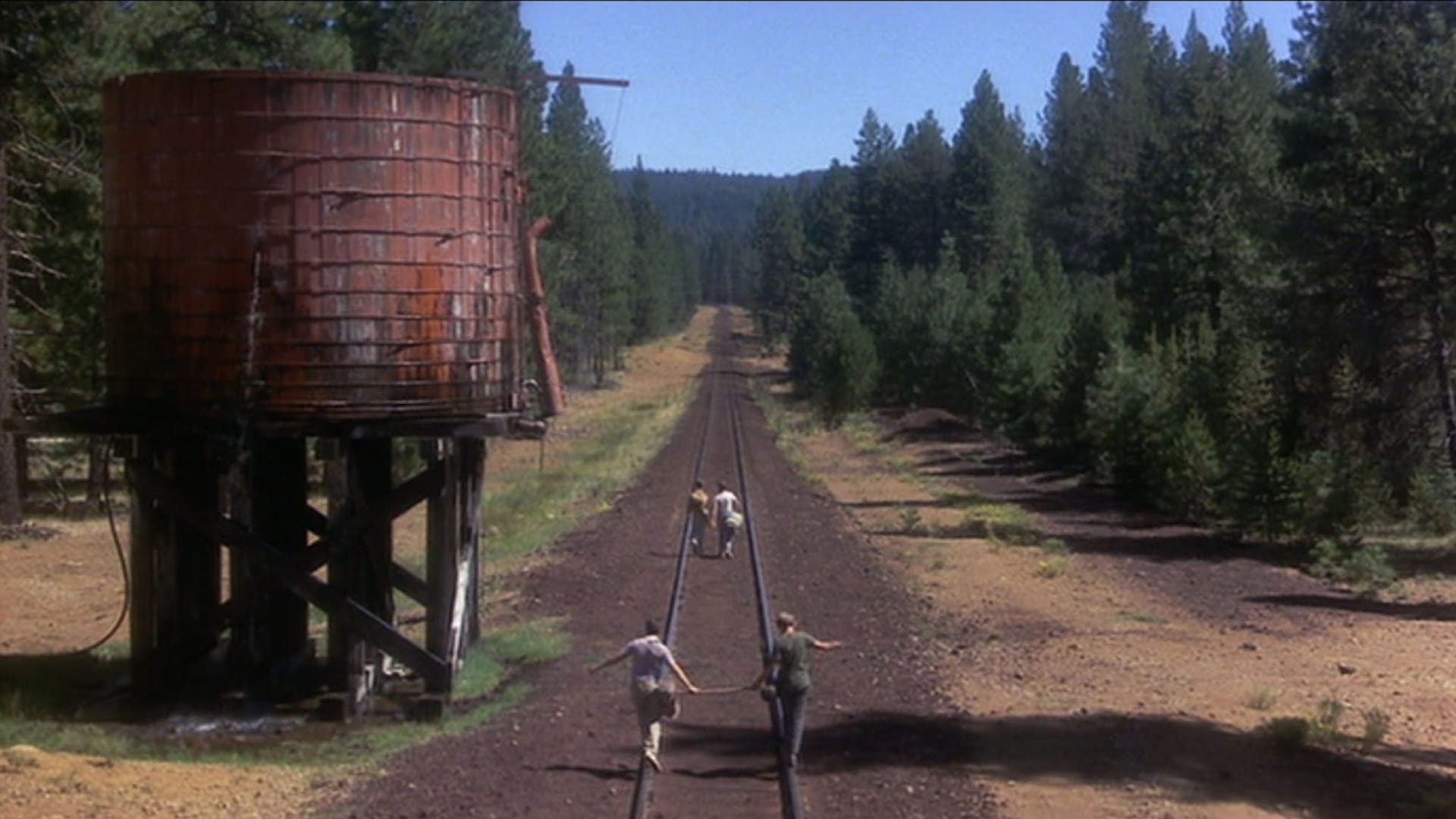
"I never had any friends later on like the ones I had when I was 12. Jesus, does anyone?" – Gordie Lachance, Stand By Me (1986)
Swann and her friends may be 16 in Lost Records, but this sentiment from Rob Reiner’s classic coming-of-age movie, still rings true. Our childhood friends were the touchstones of our formative years. They were the ones we played Truth or Dare with. The ones we argued with and made up with less than 24 hours later. The ones we camped in the woods with, tried our first taste of alcohol with, and took the bus into town with to rent the latest VHS at the local video store.
Some of the above nostalgic fragments are, of course, sadly quite unique to their time – the 1990s or thereabouts. What parents would feel comfortable enough to let their kids camp in the woods alone these days? But even today, besides the rare childhood friends that we are still close with in adulthood, most of our adult friends have not been shaped in the same way we have – they have their own kaleidoscope of memories, and as adults, we hold them close like pages in a locked diary, occasionally dusted off in the attic as we recall the things we did and said. And the things we wish we hadn’t.
"Memory is the diary that we all carry about with us." – Oscar Wilde
In the same way we have milestones when we are babies – our first word, our first crawl or our first walk – our teenage years are defined by them too. Our first music gig, our first house party, our first kiss. Unlike the baby milestones, these are not openly celebrated by family (unless you have a very unusual family!) To outsiders, they are out-of-sequence, unremarkable events, but to a teenager discovering their identity, every incident is a life-altering catastrophe or triumph. From the first blackhead spot to the last school dance.
The creators of Lost Records understand this completely. Childhood memories are not usually filled with car chases and earth-shattering revelations. More often than not, it is the mundane things we remember – the patterns on a bed sheet at a sleepover; the colour of the sky after a firework display overlooking a farm; the taste of the cherry-flavoured soda you used to buy at the shop every day after school. You remember not just the moments, but the feel of them – the sense of freedom and possibility, as alive as the soda bubbles fizzing in your mouth.
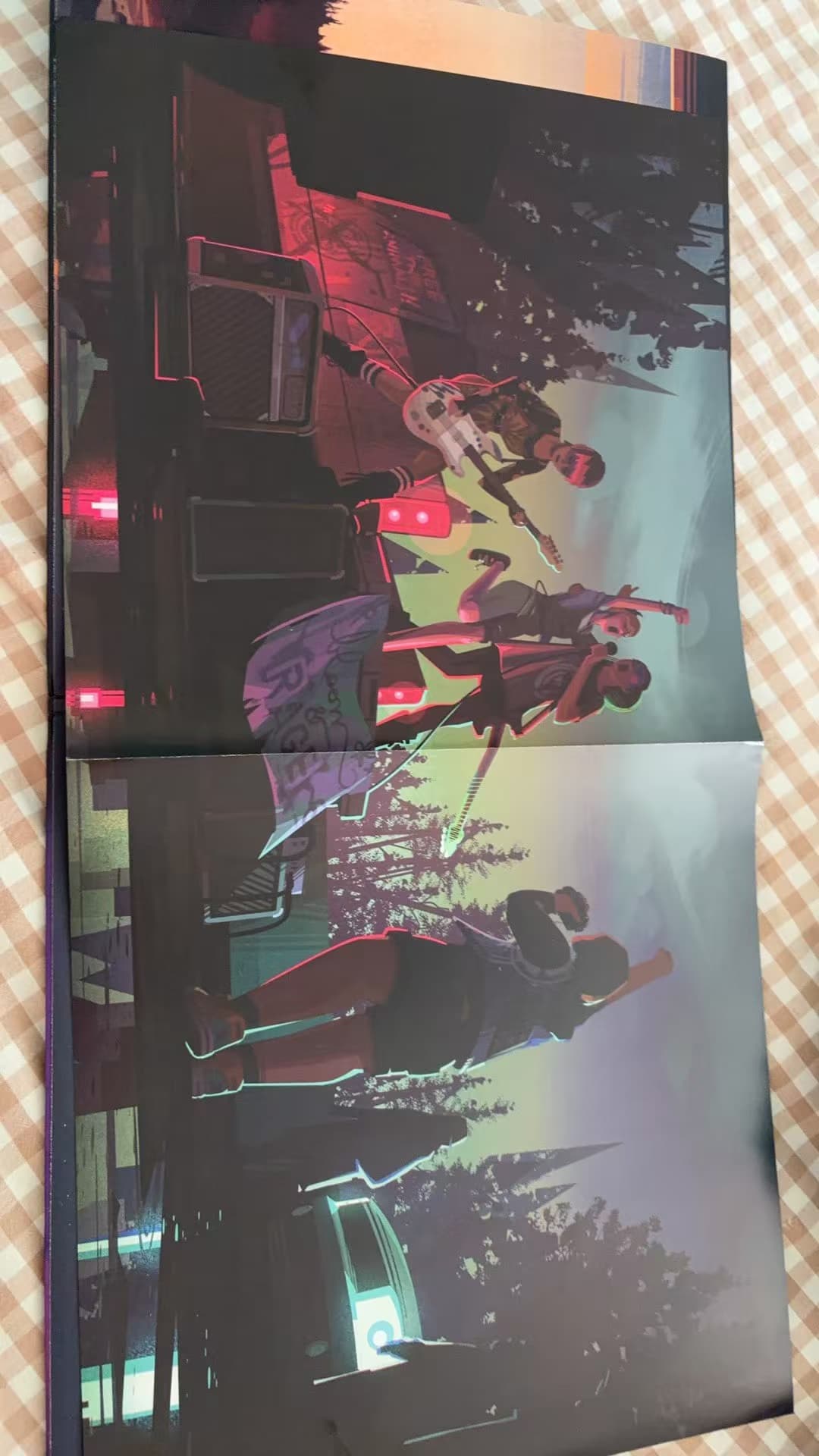
That’s what the girls in the game remember first too – not what happened to Kat and Corey at the abyss, but how they all met, how they talked on swing sets in an abandoned playground, furnished and decorated their own forest hideout, and from an overlook platform, watched the sun setting and meteors streaking across the sky.
If Life Is Strange’s enormous town-wrecking tornado was a metaphor for coming-of-age amongst the turbulent chaos of maturity, the cosmic memory loss in Lost Records could very well be a metaphor for trauma-triggered dissociative amnesia. Its two timelines – the past of 1995 and the present of 2022 – are often fighting with each other. The need to remember is at war with the desire to forget.
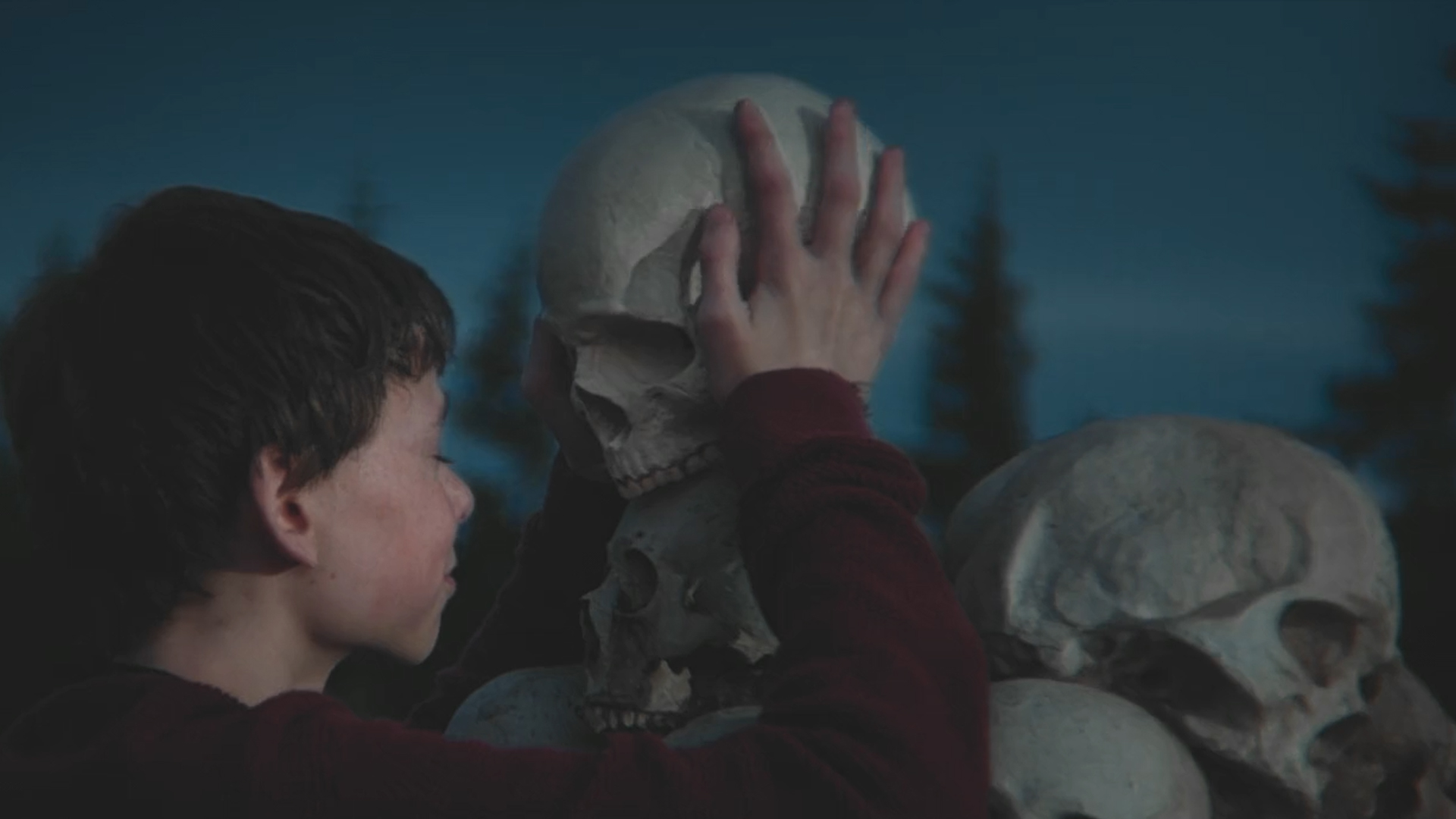
“Memento Mori. Remember you must die.”
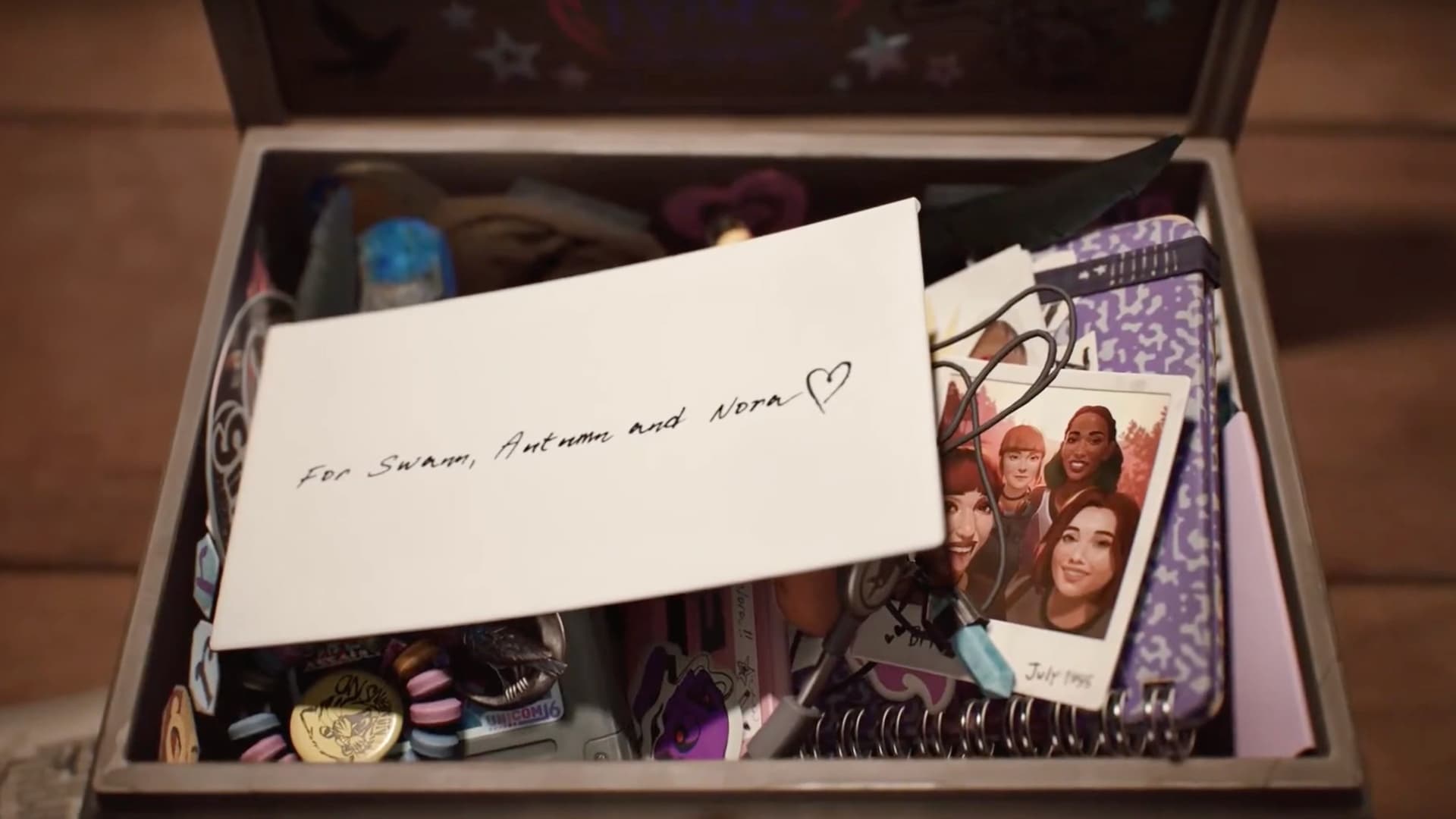
The revelation of Kat’s leukemia at the end of Tape 1 is a veritable gut punch, but it eschews the usual trappings of ‘sick lit’ because Kat refuses to be defined by her terminal illness. She is allowed to be angry and funny and sad equally, and the other girls don’t even really get to say goodbye to her properly, but by collecting the mementos along the way, she has, in her own way, been saying goodbye all along.
Our yearning for the past grows stronger as we get closer to the end of our life. The reminder of the inevitability of mortality in the famous Latin quote above (also used beautifully in the movie 28 Years Later) is meant to be hopeful rather than morbid. By accepting the fragility of life, we should be inspired to live fully in the present. That is not to say we shouldn’t look to the past at all, but one of the defining pitons on the mountain of adulthood is the capacity to move on.
Even from the grave (or the abyss, depending on your reading), Kat encourages the girls to remember her, but not at the expense of never moving on. That new town should be moved to, that family should be started, that new job landed. Nostalgia-induced memories should not be used as a map of where to go, but as a journal of where you went. A reference, not a guidebook.
A record...
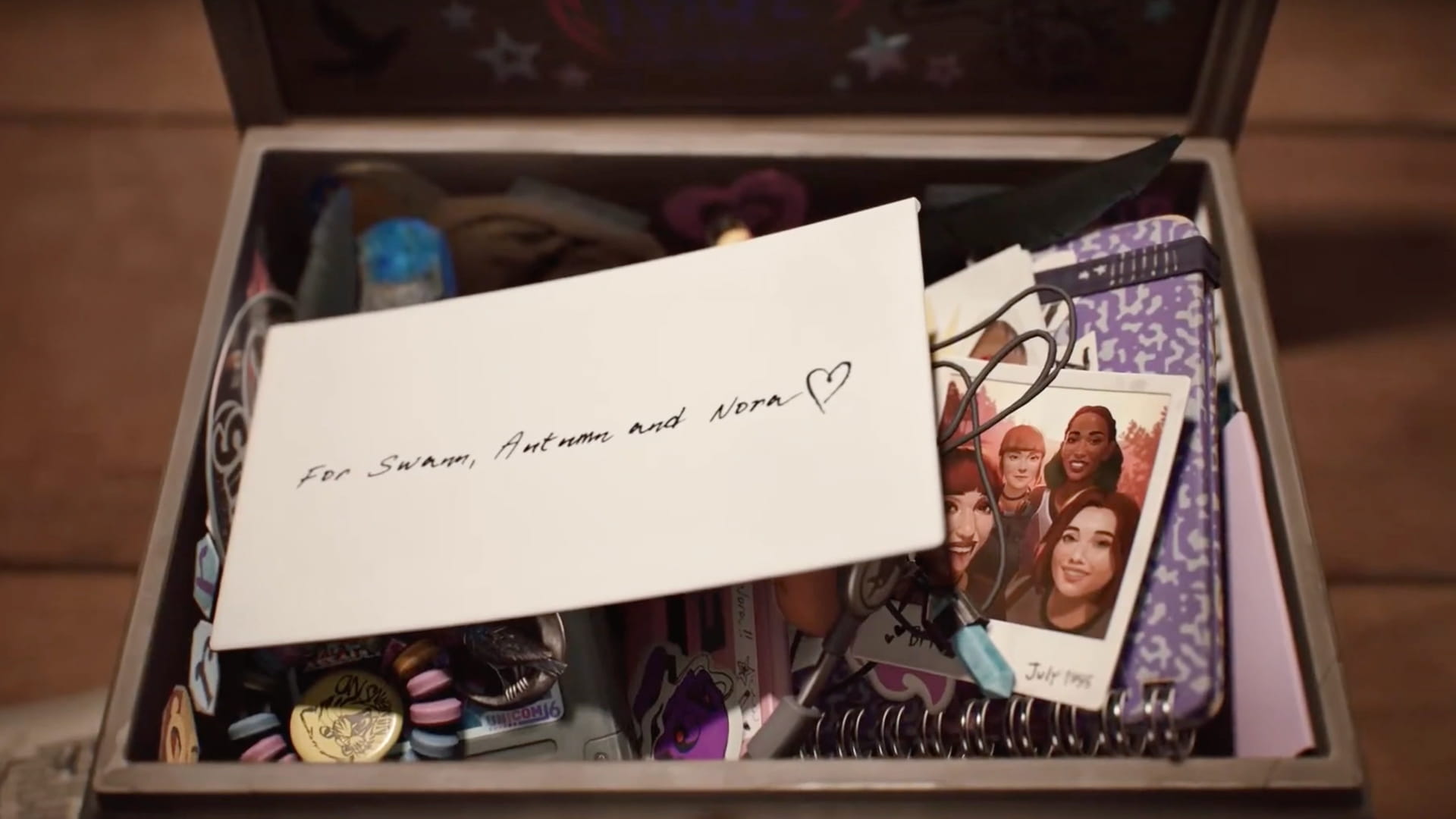
While some fans might be disappointed that the mystery package turns out to be a box of memories and trinkets from their childhood days put together by Kat before her passing, it is really the best outcome that aligns with the game’s themes. If a random person happened to stumble upon it, they might consider it no more than a box of junk, but to Swann and the others it represents their bond, their identities, and their shared love for each other. It is a curated collection of personal mementos, each item saying without words:
Memento Amori. Remember love.
------------------------------------------------------------------------------------
I apologize for any possible errors in the translation. I am translating through an interpreter. 😅
There are games that end with the end credits. And there are games that live in our memory for several hours, days, years. This is exactly what our favorite Lost Records game has become. Weeks, months pass. We review the cut scenes, listen to Ruth Radelet, notice more and more new details, and build theories about the Abyss.
A summer that can't be returned
If you remove all the mystical aspects, the story revolves around four girls: Swann, Autumn, Nora, and Kat. Each of them is unique, but that's what makes them true friends. The developers have captured the essence of a carefree teenage summer with remarkable accuracy. It's a time when an eternity seems to lie ahead. When a single day can become a lifetime. When a simple walk in the woods transforms into a memory that will stay with you forever.
Is the Abyss a Wonderland or a Pandemonium?
The biggest mystery of Velvet Cove is the Abyss. But what's interesting is that DONT NOD almost never provides direct answers. Does the Abyss grant wishes? Does it change time? Can it leave people between life and death? In my personal opinion, the Abyss is a living entity. But is it evil, or is it a land of wonder that offers a lucrative deal?
Why did the friendship between Kat and Swann become the heart of the story?
I truly consider the friendship and/or love between Swann and Kat to be a canon of the game. I respect any alternative interpretations and do not criticize them in any way; on the contrary, I even support them. Interestingly, while Swann is technically the main character, many players end the game with the feeling that Kat remains at the heart of the story. She is the bravest, the most enigmatic, the most tragic, and, in my opinion, knows much more than the others. She is the first to encounter the Abyss. Its symbol is the raven, which in many cultures is associated not only with death, but also with the transition between worlds and rebirth. This is why I personally see the ending of Lost Records not as a farewell, but as a promise... to return.
Why do we continue to build theories and live in a game?
In my opinion, DONT NOD intentionally left too many questions unanswered. Who is Celine? Why does Kat see her in her dreams? Who built the cabin? Why did the man from the newspaper clipping return 20 years later without aging? Why is Swann's camera in a box? What does the blue glow mean when Kat plays with her knife and in the eyes of the deer? And finally... Is it possible to bring Kat and Swann back?
The ending that became the beginning
If the developers wanted to end the story, they could have stopped at the scene where the adult versions of Nora, Autumn, and Swann are hugging each other outside the bar. But they didn't. Instead, Swann receives a message from Kat asking her to find her. Swann responds with, "Kat, I'll find you!" and takes a step into the Abyss. This is not the end. It is a promise. A promise that the story is not over yet. This is why we keep returning to Velvet Cove. Not only for the sake of answers, but also for the sake of hope. As long as there is even the slightest chance that Swann will find Kat one day... We will also continue to search for her.
Thank you for reading my article. It is an outpouring of all my feelings and thoughts. It is with you, on this website, that I can be myself and know that I will always be understood. See you in hell! 💜🎸